 Orbily™
Ursa Minor Start here
Where you return to find your bearings.
An orienting first look at how you notice things, how you connect, and what's going on underneath.
the astrophysics of self
Orbily maps who you are the way astronomers map the sky: one constellation at a time, one question per star. Each session takes about seven minutes and returns a reading drawn from your own words.
Coming to iPhone. For ages 14 and up.
The idea
Astronomers have never seen the whole sky at once. They learn it a constellation at a time, returning night after night until the pattern holds. Orbily asks you to learn yourself the same way.
How it works
Every question is a star. Answer it and it lights. The questions start easy and go deeper as you go, and the last one always looks forward. By the end you have drawn a constellation, and Orbily has read it back to you.
Orbily offers a few constellations, each with a short line about the feeling it explores. Pick the one that pulls at you today.
Five you answer with a tap, four you answer in writing. Every multiple-choice question leaves room for “something else.”
A short reading of what your answers show, written from what you said. Keep it, reply to it, or mark it private.
The constellations
The names come from the old star atlases. The questions belong to the territory each one covers. Within a constellation, every guiding star leads a different sequence, so you can return and find new ground.
Where you return to find your bearings.
An orienting first look at how you notice things, how you connect, and what's going on underneath.
Where you belong to a larger plan.
What drives you, and whether the direction you're moving in is actually yours.
The freedom that lives outside of others' approval.
What sets you free, and whether your need for freedom is a gift or a way of never fully arriving.
Where you return to feel like yourself.
What you make and why you make it, even if what you make isn't art in the traditional sense.
Where you feel you must belong.
Belonging, attachment, and what home really means.
The area in your life that deserves more attention.
How you live in your body and in the world, and the tension between being grounded and holding on too tight.
The trust you extend beyond what you can see.
How you feel with and for other people, and what happens when the boundary between their pain and yours gets thin.
The authority you carry without always claiming it.
How you lead, and whether you lead to give something or to be seen giving it.
The way you shift depending on those around you.
The different versions of yourself you carry, and what it costs to keep all of them alive.
Nine constellations at launch, with more to come. Five share their names with the zodiac; Orbily borrows the names, never the horoscope.
Between sessions
Smaller moments fill the days in between. None takes more than a minute, and each one adds to what Orbily knows about you.
Questions that come back every few weeks, so you can see how one part of you changes over time.
Light, quick questions, including the books, films and music that stay with you.
A real fact about the sky, with one question attached if you feel like answering it.
Prompts from your earlier insights that come back days later, so a thought can keep going.
Signal & stars
Orbily keeps track without keeping score. Your signal shows your rhythm; your stars show your depth.
A pulse on your Home screen. Each day you return adds a ring. It brightens while you're active and dims while you're away, so you can see your own rhythm at a glance. Nothing is lost when it fades; it rebuilds when you come back.
Every answer can earn up to five stars for depth and candor. A quick tap earns none, so there's nothing to game. Stars unlock reports, and more of them sharpen the reports you already have.
What comes back
After every session, a short reading of the pattern in your answers. It quotes and builds on what you said and stops short of telling you what you think. Heart the lines that land. Reply to the ones you'd push back on.
Books and films chosen for you from the themes running through your sessions, each with a short note on why it might matter to you. They arrive a few at a time.
Longer documents built from everything you've shared, unlocked with stars. Each one sharpens as your record grows. Export any report as a designed PDF.
Trust & privacy
Orbily only works if you can be honest in it. So the most private things in the app are locked on your phone before they ever reach us. We can't read them, and we never sell, share or advertise.
“Orbily runs on trust. I designed it from the ground up to earn that trust.”Adam Muri-Rosenthal, founder
Once you sign in, your answers, your reflections and everything Orbily writes for you are encrypted on your device before they're saved. Our servers hold only scrambled code.
The key that unlocks your data never sits on our servers in usable form. Even if our systems were breached, what someone found would be unreadable.
To write your insight, the relevant answers are sent without your name, email or account to the AI service that composes it. Nothing you write is used to train AI models.
We will never sell your data, share it for advertising, or show you ads. There are no tracking or advertising tools in the app.
Mark any answer private. A report reaches a counselor or anyone else only when you send it yourself, and Orbily shows you exactly what's going before you confirm.
Export everything as a PDF or a data file whenever you like. Delete your account and you have 30 days to change your mind. After that it's gone for good, along with the key.
If something you write suggests you may be in danger, Orbily shows you support resources for your country. It never contacts anyone on your behalf, and nothing is stored against you.
Who it's for
Orbily is for anyone 14 or older who wants to know themselves better. When someone chooses to share, the people who advise them meet them through their own words.
Start here
Applications, interviews and big choices all ask who you are. Orbily gives you seven minutes at a time to work that out in your own words, long before a deadline asks.
College Essay Narratives
Orbily surfaces the moments in your record that could carry an essay and matches them to the prompts they answer best, in your own words. You still write the essay.
Learning Type
A description of how you take in and hold what you learn, drawn from how you describe yourself rather than from a category.
Your call
Everything you write is encrypted on your phone. If you work with a counselor, you can send them a Counselor Summary. Nobody sees anything you don't send.
For ages 14 and up
Join the waitlist and tick the box for early builds if you want to help test it.
Join as a studentFor anyone at a turning point
A new job, a move, a change you didn't choose. Orbily asks the questions you rarely get asked, one constellation at a time.
Orbitals
Some questions come back every few weeks, so you can see how your answers move over months instead of guessing.
Reports
A Strengths Portrait draws three to five strengths from across your sessions, each traced to the moment it first showed up. A Values Statement and Interview Prep are in the works.
Early access
Tell us what brought you, and tick the box if you'd like to test early builds.
Join the waitlistFor families
Orbily gives students a private place to reflect on who they are and where they're headed, a few minutes at a time.
Privacy by design
What your child writes is encrypted on their phone. You see only what they choose to share, and Orbily never shows parents anything on its own.
Working with a counselor
If your family works with a counselor, your student can send them a Counselor Summary written in their own voice.
Interested?
We'll tell you when Orbily is ready for your family.
Join as a parentCounselor Summary
A briefing written for the person advising the student, in the student's own voice: who they are in brief, their strengths and passions, where they're still growing, the direction they're leaning, and how to work with them.
An account of a student's interior life, in their own words and on their own terms, gathered and arranged for the person advising them.
A sample
Marta is a demo student. Read the Counselor Summary Orbily wrote from her sessions to see what reaches you when a student shares.
Read Marta's summaryConversation starters
Every Counselor Summary ends with openings drawn from what the student has actually said, so the first meeting starts past small talk.
College Essay Narratives
The stories in a student's record that could carry an essay, matched to the prompts they answer best and kept in the student's own words wherever possible. A starting point for drafting, never a ghostwriter.
Consent by design
Everything a student writes is encrypted on their phone. Nothing reaches you unless they choose to send it, and what arrives is a clean, designed PDF you can read before you meet.
Counselor beta
We're inviting school counselors, independent educational consultants and test-prep tutors to test early builds and shape what comes next.
Join as a counselorIn development
We're designing reports a client can bring to you, such as a Relationship Inventory: how they bond, and what their patterns ask of them.
Same promise
The same encryption and the same rule apply: nothing is shared unless the client sends it. Orbily is a reflection tool and never a substitute for care.
Shape it with us
If you'd like early access when the therapist tools open, join the list and tell us how you work.
Join as a therapistPlanned
A Life Coach Briefing is on the roadmap: where your client is, where they want to be, and what stops the movement, in their own words.
Early interest
Join the list and tell us what would help you most.
Join as a coachQuestions
No. Orbily uses constellation names the way an atlas does, as a way to organize the sky. Each one is a framework for questions about one part of your life. There are no birth charts, signs or predictions.
No. It's a tool for reflection. It doesn't diagnose anything, and it isn't a substitute for care from a professional. If something you write suggests you're in danger, Orbily points you to support resources.
Anyone 14 or older who wants to understand themselves better: students thinking about what comes next, people at a turning point, and anyone who likes to think on paper. Students working with a counselor get reports made to share, and parents, counselors, therapists and coaches each have a way in.
iPhone first. Android soon.
We'll share pricing before launch. Everyone begins with Ursa Minor.
Orbily writes readings and reports from your answers. It doesn't write in your place. Even the essay report hands you your own stories to draft from.
Orbily is in testing now. Join the waitlist and tick the box for early builds if you'd like to help test it.
Inspirations
The books, films and series that inspired Orbily. Each one turns toward the sky and ends up somewhere closer to home.
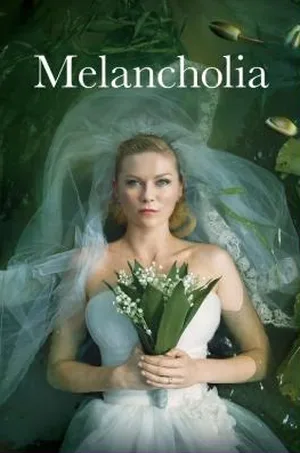
Melancholia
Lars von Trier · 2011
A rogue planet approaching Earth acts as a metaphor for a personal collision.

Interstellar
Christopher Nolan · 2014
Interweaves science and self-discovery.

Arrival
Denis Villeneuve · 2016
Learning an alien language changes how a linguist understands her own life.

Silo
Apple TV+ · 2023
As the characters try to learn what the stars are, they also start to understand themselves.
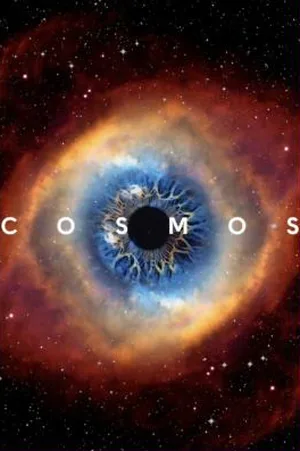
Cosmos: A Spacetime Odyssey
Neil deGrasse Tyson · 2014
The universe told as a story we belong to.

Andor
Tony Gilroy · Disney+ · 2022–2025
A drifter slowly decides what he believes, and what it will cost him.
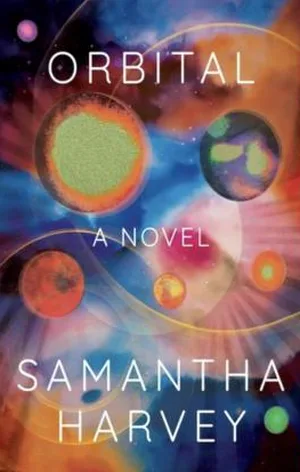
Orbital
Samantha Harvey · 2023
With each trip around the Earth, the characters learn about themselves.
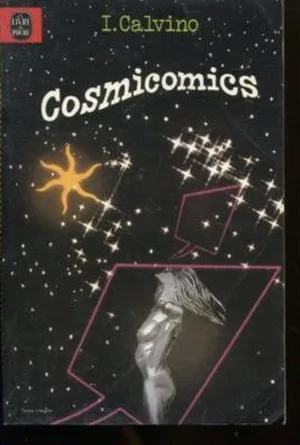
Cosmicomics
Italo Calvino · 1965
Tales told by a narrator who was there when the universe took shape.
The Odyssey
Homer · c. 8th century BCE
A long voyage home, steered by the stars: Calypso tells Odysseus to keep the Bear on his left.
Circe
Madeline Miller · 2018
The daughter of the sun, exiled to an island, learns what she is when no one is watching.
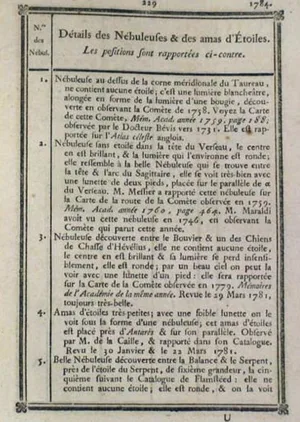
Catalogue des Nébuleuses et des Amas d'Étoiles
Charles Messier · 1781
An astronomer's patient list of the sky's faint clusters and nebulae. Astronomers still call them by his numbers, M1 to M110.
Coming soon.

Who's behind it
Adam Muri-Rosenthal, Ph.D.
Founder
Adam has spent his career beside students at the moments that shape them. He served five years as Academic Dean in one of Harvard's largest residential communities and as Associate Dean at Loyola's Rome Center, and he has taught language and film. He holds a Ph.D. from Harvard, along with degrees from Vassar and Middlebury.
He is co-founder and Chief Academic Mentor of Hyll Education, a university admissions mentoring practice in Valencia, Spain, where he lives. Orbily grew out of those years of conversations about who students are and where they're headed, and it's built for the conversations that come next.
The waitlist
Join for launch news and, if you'd like, invitations to test early builds. We send word only when there's something worth telling.